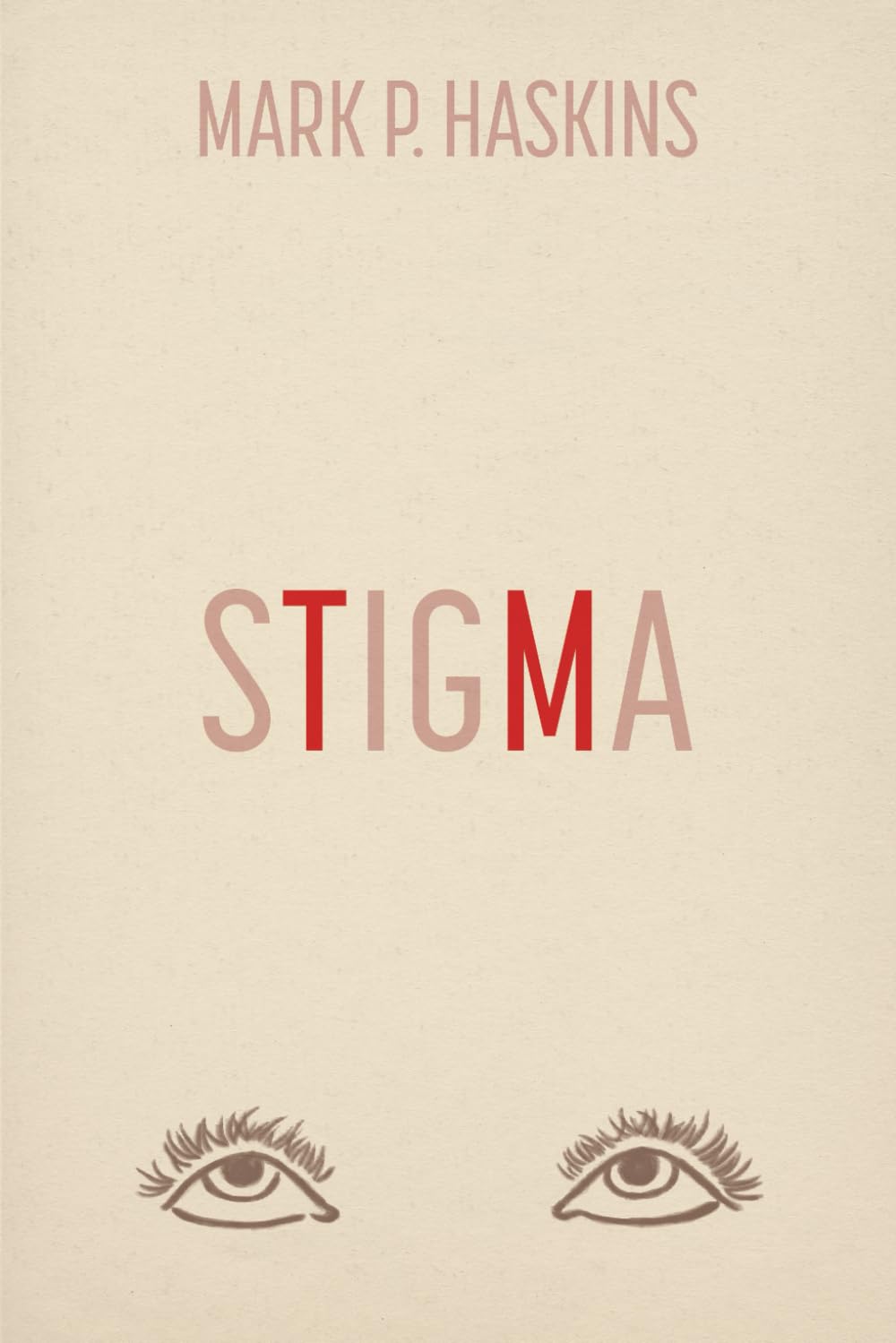
In a remote corner of Scotland, a red, holographic letter ‘P’ appears over Orville, a cottage dwelling wildlife-photographing guy, who is then accosted by a crowd from his village about the weird letter hanging over his head. Meanwhile a flight attendant thinks she momentarily notices a similar red holographic letter ‘T’ over the head of a passenger on a flight landing in the UK. Beginning in Scotland and then gradually moving south through England, these letters start appearing over some people and it’s not very long before people come up with a meaning for each letter. But the origin of the letters, and how they are being displayed, are as yet unknown.
As these holographic letters or Stigmas as they are soon called spread over the next few days, starting as mere curiosities and then growing into some sort of endemic panic, for Orville and others with stigmas, the only choice seems to flee southward ahead of the stigmas (because it is not displayed when someone is out of its current coverage area) and away from the village gossips and news reporters.
Stigma the novel is written from the point of view (POV) of several characters: Rachel the owner and manager of a refuge for abused women, Samantha the Prime Minister of UK who has to wonder, in metaphorical ways, what these Stigmas mean for her political career, Michael a high ranking member of a Manchester gang who is looking for opportunities to advance further up in the gang, Father Steven the Catholic priest who is starting to doubt his faith and is looking to quit the priesthood before the Stigmas showed up, as well as other characters whose momentary POV helps to relate the plot of the novel. This method seems to work for the novel; the reader gets a holistic view of the unfolding story, and how different people in different stations of life similarly or differently view and act in such a crisis.
The novel is written at a steady pace, and the author employs a slightly detached writing style which is probably fitting for capturing the various characters’ interesting behavior in the circumstances; human behavior, in groups and as individuals, are explored in this novel. The reader might wonder, would the characters and people react differently if such a crisis occurred in real life? But that may require scientists like those in the novel trying to figure out the Stigmas to simulate the various ways in which people may react in the crisis. I believe the POVs and the writing style serve the story well; my only gripe is that there are one too many proofreading and editing errors that interrupt and slightly mar the reading experience.
The main premise of Stigmas the novel is creative and intriguing in its own right, and the proceeding story is deftly handled. Humans at our worst and best moments are examined in this novel in an interesting way. Counter-intuitive personalities, such as Rachel, who seems quite a worrywart for a person who stands for and looks after abused women, are found in this novel. Stigmas is about a crisis and human reactions, and it is also about human resilience and creativity. Overall, I enjoyed the novel: it feels like the interesting crisis novel that lovers of thrillers about the human condition and experience should read.
 Library books by Shadrack Antwi
Leave a comment