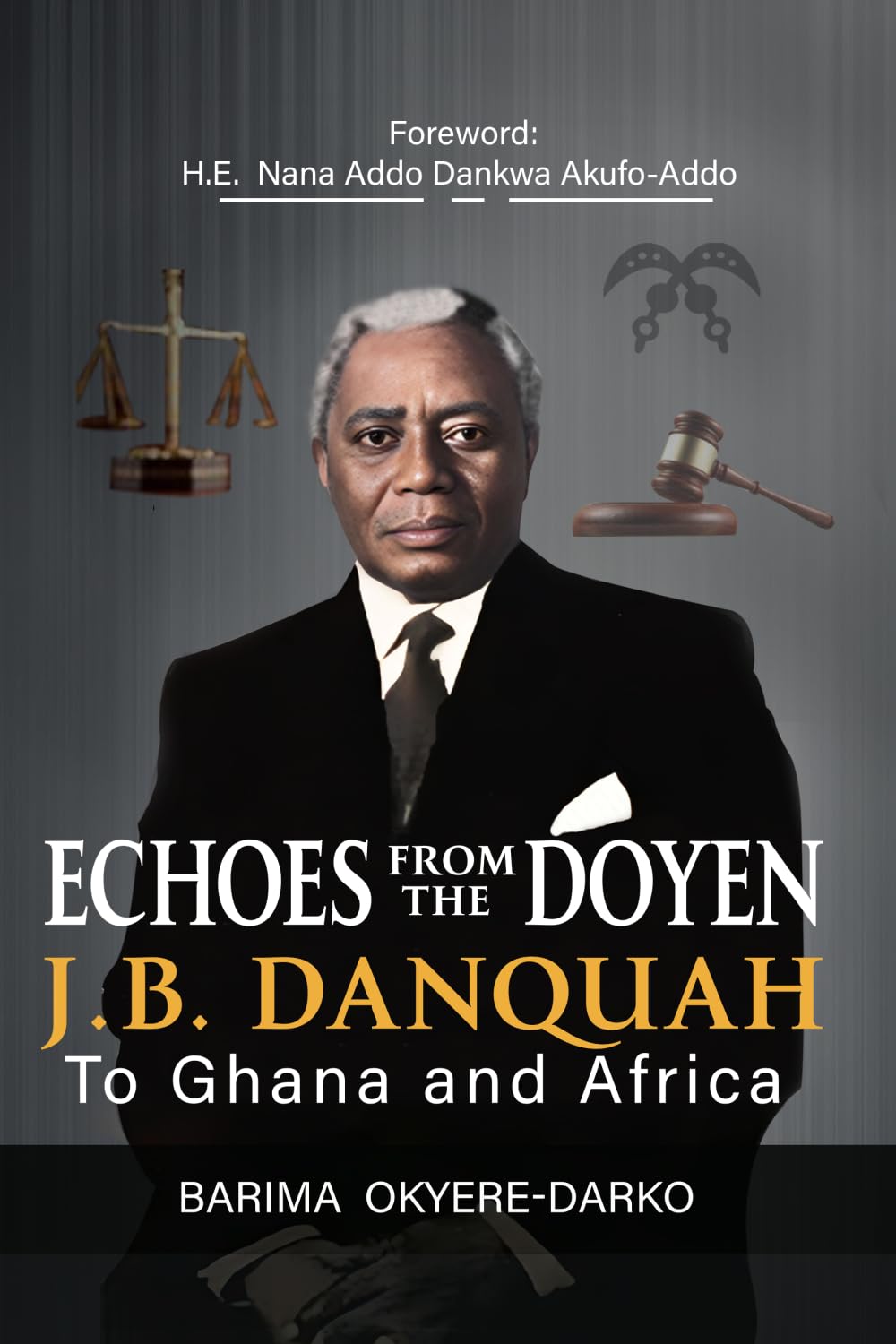
In the struggle for independence which swept across Africa and much of the global south from about the 1940s to as late as the 1980s, one of the men who played a more than significant role in building the foundations for Ghana’s independence of 1957 was Joseph Boakye Danquah, popularly known as J. B. Danquah. Telling J.B.’s story is telling Ghana’s many false starts and resets at building a constitutional democratic republic. Coup d’etats or presidencies turning fast into dictatorships had a way of upsetting the constitution writers and hopeful citizens in countries recently-formed after European contact and rule had upended traditional governing structures, and provided unexpected paths and individuals to power, for good or bad.
Quite lot of history books and articles have been written about Ghana in those days and before, tracing the history of the tribes and kingdoms through the period of first contact with Europeans, wars, trading and slave trading, colonization, and the birth of the sense of nationhood as Ghana. J. B. Danquah usually gets some mention; you can’t avoid the man who was instrumental in starting the United Gold Coast Convention (UGCC), the party that initiated the fight for an independent and contiguous Ghana in the sense we have now. Of course, it was the CPP of Kwame Nkrumah that eventually led Ghana to independence; but it was the UGCC that invited Kwame Nkrumah back from the UK to join the fight for independence in the Gold Coast, Ashanti and Northern territories; and it was the UGCC that provided Kwame Nkrumah the platform from which he was to break from and seek a more urgent fight for indepence.
So why is such a book needed about J.B. Danquah? Because, as the author says, and I agree, not much justice has been done to J.B., in terms of adequately acknowledging his contributions to Ghana’s independence within the main narrative that Nkrumah led Ghana to independence. A lot of J.B.’s contributions, his diplomatic achievement in convincing the Ashanti and Gold Coast to fight for independence as one nation, smoothing the relationships between chiefs and the formally educated, and nurturing many young and talented people such as Nkrumah as politicians, that truly set Ghana on the march for independence.
The author provides background research and behind the scenes look at Danquah and the Big Six and the behind-the-scenes relationships and maneuverings during the days of UGCC and CPP. Though he makes no bones about it that this is an advocacy for Danquah and his visions for Ghana, he is impartial in his look at Kwame Nkrumah and how the relationship deteriorated between Danquah and Nkrumah as the latter broke away to form the CPP and UGCC lost all post-colonial power to the CPP.
The fact and how Danquah, who helped considerably to lay the foundations for Ghana’s independence died in a small prison in independent Ghana, is discussed at length in Echoes from the Doyen. The author gives historical look at the attitudes in Ghana of those days, and the constitutional structures that enabled or allowed such political detentions.
Overall, this is a good book, well researched and well-written. With the passing of historians such as W. E. F. Ward and Albert Adu Boahen, such writings are necessary to keep alive the stories of how Ghana was shaped. With such an in-depth look at the conditions facing one of the men who moved in the heady days of fighting for independence from a colonial empire alongside political rivals, Echoes of the Doyen makes an educative read for any political operator who seeks to function in an unpredictable political terrain and make meaningful contributions. Danquah passed away as his visions for Ghana seemed to dim; hopefully, Ghanaians and Africans, and indeed people all over the world, keep focus, so that ideas of liberal democracy and human rights do not also die in prisons of all manner.
Disclaimer: I know the author personally.


Leave a Reply